

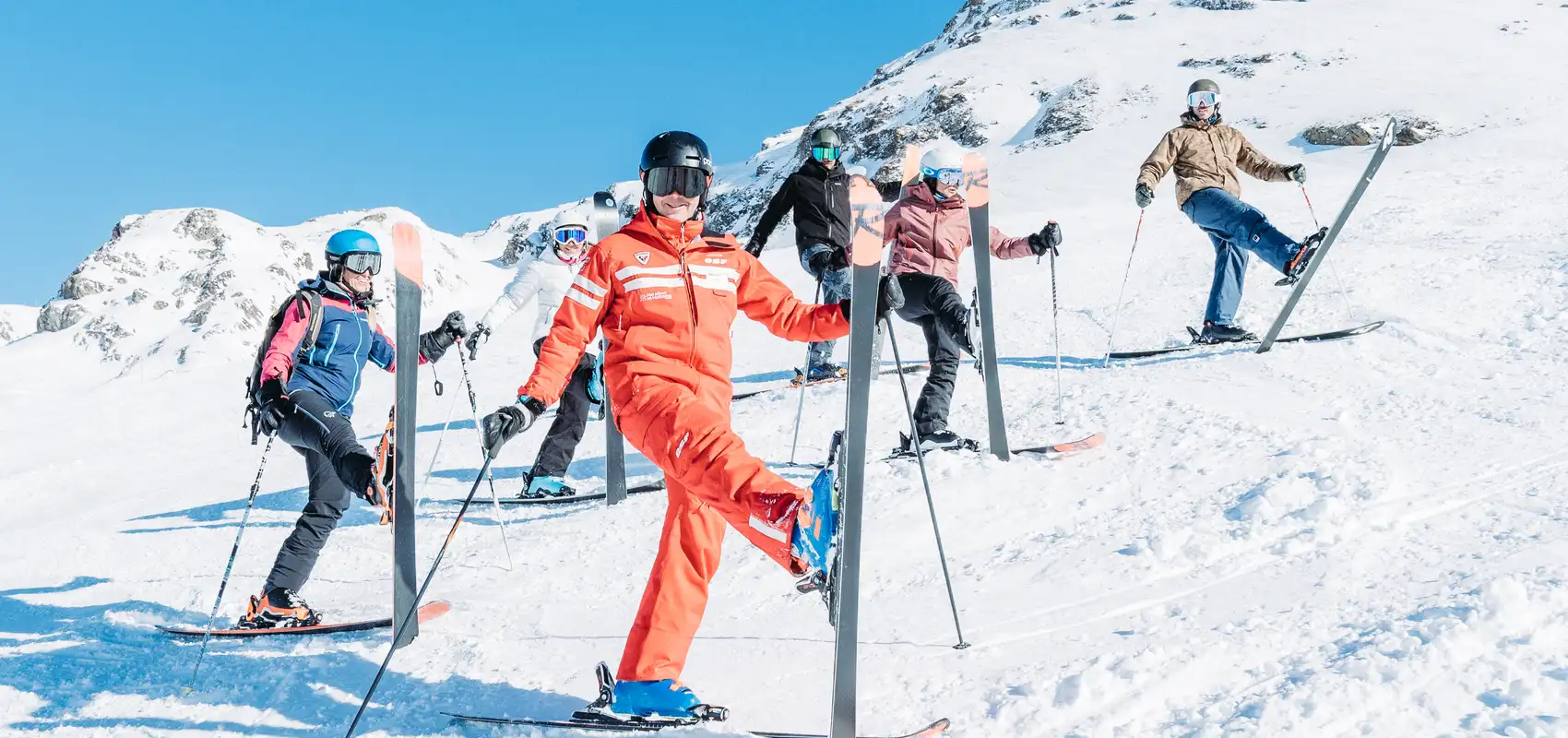
Yes, it is entirely possible to learn to ski as an adult, even if you did not start as a child. With suitable instruction, well-chosen equipment and patience, you can discover the joys of skiing at your own pace. In Alpe d’Huez, beginner adult group lessons and private lessons provide guidance from your very first sessions.
Have you dreamed of discovering skiing for a long time, but think it is too late to start? Rest assured: you do not need to have grown up in the mountains to learn. The aim is not to immediately follow your family and friends on every slope, but to gradually build your confidence and enjoyment.
Can you really learn to ski as an adult?
The answer is simple: yes. The idea that you must have started as a child to be able to ski is a misconception. Age alone does not determine your ability to learn: your fitness, sporting experience, apprehension and learning conditions also matter.
Adults can draw on several strengths:
- understanding instructions;
- the ability to analyse how movements feel;
- being able to express their difficulties;
- personal motivation to improve.
There is therefore no need to compare yourself with children. Your journey will be different, and every step forward will have its own value.
Why do adults learn differently?
When starting out, you often want to understand what you are doing. How do you slow down? Why should you adjust your position? How do you make a turn or control your speed? These questions are natural.
Your instructor’s explanations help you connect movements with the sensations you experience on the snow. You can ask for a demonstration, request clarification of an instruction or mention an exercise that worries you. Understanding what you are trying to achieve helps you approach each attempt more calmly.
Tip 1: stop comparing yourself with others
One of the main sources of stress for adult beginners is comparison. You may arrive at a resort where your family and friends have been skiing since childhood and seem to move with incredible ease.
But everyone learns at their own pace. The aim is not to become an expert in a few days, but to progress step by step. Early achievements matter:
- moving around on skis;
- finding your balance while gliding;
- slowing down and stopping;
- making your first turns;
- skiing on suitable terrain with greater confidence.
Every step deserves recognition. You have nothing to prove to the skiers accompanying you.
Tip 2: accept a little apprehension
Fear of the slope, speed or falling can be part of starting out. This apprehension is not a weakness and does not mean you are unable to learn.
Talk to your instructor about it. They can take your reactions into account when choosing suitable exercises and terrain. If a situation feels too difficult, say so before committing to it.
Confidence develops through practical reference points: knowing how to slow down, understanding an instruction and repeating a movement on a manageable slope. There is no need to eliminate all fear before you begin.
Tip 3: trust a gradual learning process
When starting out, it is tempting to want to progress quickly. Yet skiing develops step by step. The first sessions focus in particular on:
- getting to know the equipment and learning to move around;
- balancing on a gentle slope;
- your first glides;
- controlling your speed and stopping;
- changing direction;
- using suitable ski lifts.
Each step prepares you for the next. Green runs can then provide terrain for further progress, depending on their characteristics and the snow conditions. Blue runs will come when your skills allow: skiing them is not a compulsory goal for your first week.
Plan breaks too. Accumulating runs when you are getting tired is no substitute for regular, attentive learning.
Tip 4: choose suitable equipment
Suitable equipment makes discovering skiing easier. For your first experience, hiring allows you to benefit from professional advice without buying your equipment straight away.
Explain clearly that you are a beginner. The hire shop can guide you according to your height, weight and ability, then adjust the bindings. Take time to try on the boots: they should hold your feet securely without causing pain.
Think about your comfort too:
- a waterproof jacket and trousers;
- layers of clothing suited to the weather;
- gloves and ski socks;
- a properly fitted helmet;
- ski goggles or sunglasses;
- sun protection.
Have your equipment prepared before your first lesson and allow extra time to reach the meeting point without rushing.
Tip 5: take lessons from the start
Many adults hesitate to take lessons because they worry about what others might think or believe they can learn alone. However, professional instruction provides tailored corrections, helps you establish reference points and teaches you the rules of conduct on the slopes.
Group lessons: learning with other adults
The adult group lessons at ESF Alpe d’Huez include a beginner class for people who cannot ski. They allow you to share your first experiences with other learners of a similar ability.
The options available include six morning, afternoon or full-day lessons, depending on the period and availability. Check the times and departure area for your dates.
Private lessons: personalised guidance
Private ski lessons allow you to work on your particular needs. ESF offers sessions of one hour, one and a half hours or two hours around lunchtime, as well as other formats depending on the period.
Before booking, check the details of the service and the ski lift pass required. Equipment and insurance arrangements should also be considered in advance.
How long does it take to learn to ski?
There is no guaranteed timeframe for becoming independent. Progress depends in particular on the regularity of your sessions, your confidence and the conditions you encounter. A first week can help you build a foundation, but everyone progresses differently.
Avoid setting yourself a fixed number of days to manage a run. Instead, ask your instructor which skills to consolidate and what terrain to continue practising on.
Mistakes to avoid to enjoy your first skiing experiences
Trying to follow more experienced family members or friends, hiding your difficulties or continuing despite tiredness can make learning harder. Ask questions and accept the need to repeat exercises.
Falls can happen, even in a beginner area: they should neither be dramatised nor dismissed. Learn the right techniques for getting up and setting off again with your instructor.
Sometimes the hardest part is simply daring to start. With achievable goals, comfortable equipment and suitable guidance, you can discover the pleasure of skiing without turning your holiday into a race for performance.