

Skiing or snowboarding: which should you choose for your first mountain holiday?
For beginners, skiing often provides more familiar starting points because the legs remain independent. Snowboarding involves getting used to a sideways stance, with both feet attached to one board. Both disciplines are accessible to beginners: the best choice mainly depends on your preferences, confidence and the time you devote to learning.
You are preparing for your first mountain holiday, and one question keeps coming up: should you start with skiing or snowboarding? The two disciplines offer different sensations and are not learned in exactly the same way. Here are the points to compare when preparing for your first sessions in Alpe d’Huez.
Skiing or snowboarding: there is no wrong choice
First of all, rest assured: neither discipline is better for everyone. Your choice can take into account:
- the sensations that appeal to you;
- your experience of other sports;
- your fitness;
- your apprehension;
- the length of your stay;
- the lessons available for your age and ability.
You do not have to learn to ski before starting snowboarding. If the board appeals to you more, that enthusiasm is a good reason to try it with suitable guidance.
Skiing: often reassuring first steps
The advantages of skiing for beginners
When skiing, your legs remain independent. You can move one foot and then the other, walk a short distance and gradually become familiar with gliding. This freedom of movement can make your first movements more intuitive.
Learning focuses in particular on balance, slowing down, stopping and changing direction. On flat sections, moving around is generally more practical than on a snowboard, although it also takes some practice.
Skiing can therefore feel reassuring for a first experience. However, this does not guarantee immediate independence or access to a particular run after a few hours.
Technique that develops over time
Your first glides are only the beginning of learning. Controlling your speed, adjusting your line and skiing on different types of snow take practice.
Parallel skiing and, later, carved turns are other possible stages. You do not need to aim for a red or black run to appreciate your progress: enjoyment can begin on a gentle slope.
Snowboarding: discovering a different kind of balance
First sessions that can be demanding
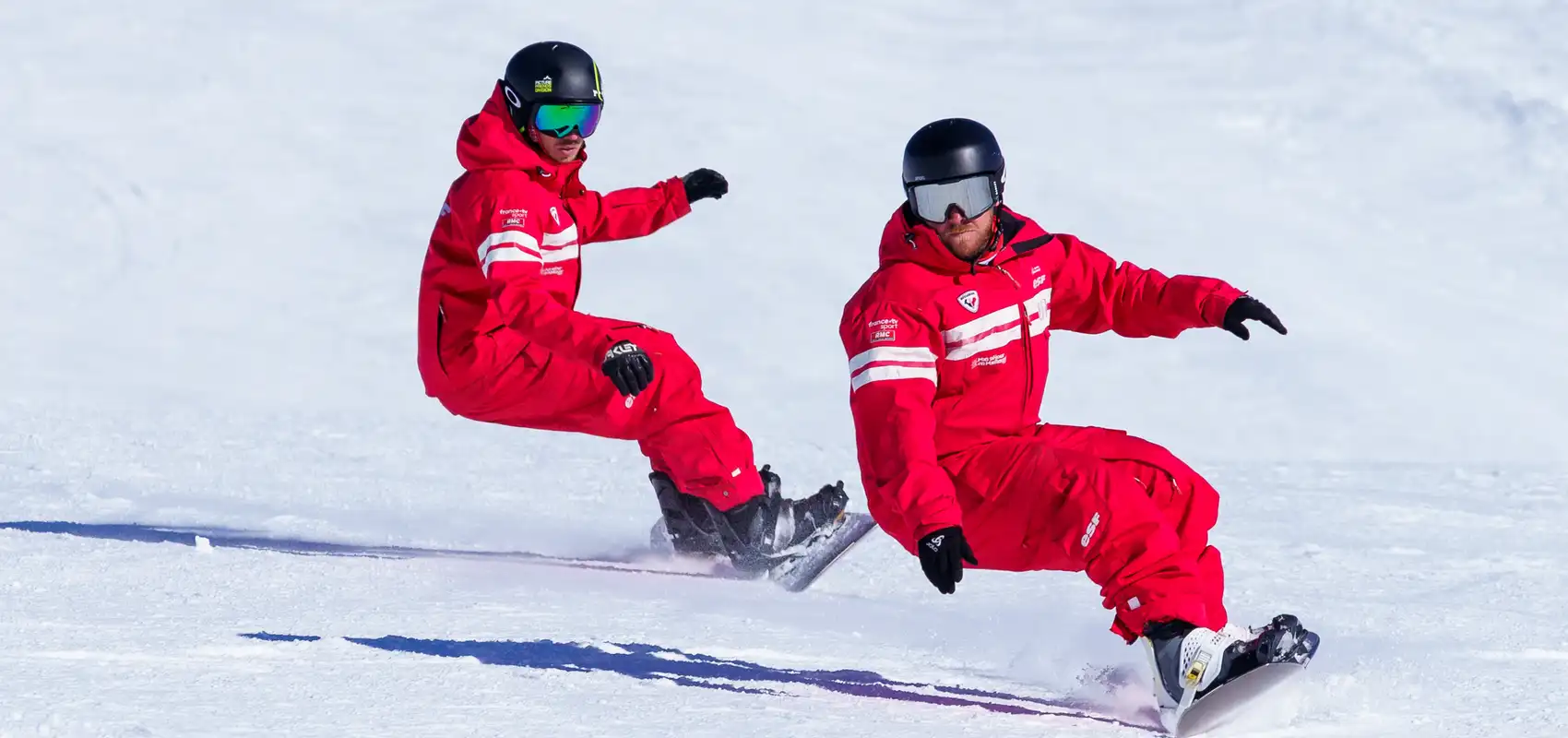
When snowboarding, both feet are attached to the same board during the descent. The sideways stance and moving from one edge to the other require new reference points. Your first sessions may involve losing your balance, falling and moments of frustration.
These difficulties do not mean the discipline is not right for you. You are learning in particular to control sideslipping, stop and steer your board. On flat ground and for certain lifts, you also need to learn to move with one foot unstrapped.
Rewarding sensations as things start to come together
As balance and edge changes become more familiar, turns can become smoother. It is often this feeling of continuous gliding that attracts beginners to snowboarding.
However, there is no guaranteed breakthrough on the third day. Some people progress quickly, while others need more repetition. The same variety exists among skiers.
Which discipline requires more physical effort?
Both skiing and snowboarding use your legs, balance and core strength. Tiredness depends on your fitness, the length of your sessions, the terrain and the snow conditions.
In snowboarding, getting up and handling the bindings can make the early stages demanding. In skiing, holding certain positions, moving around and getting up also require physical effort. It would therefore be too simplistic to say that one discipline is always less tiring than the other.
Plan breaks and let your instructor know when you are tired. A session suited to your energy levels will be more enjoyable than a series of difficult descents.
Skiing or snowboarding for a child: what ages apply in Alpe d’Huez?
An introduction to skiing for young children
The Chalet des enfants at ESF Alpe d’Huez offers an introduction to skiing from the age of two and a half, with an option presented for children aged two and a half to 4. Learning takes place in a protected area through fun courses and activities.
This introduction is different from outings on the ski area’s slopes. Reaching the admission age does not mean a child is ready to follow a group on any terrain.
Children’s group skiing and snowboarding lessons
Children’s group ski lessons are available for ages 4 to 12. Children’s group snowboarding lessons are for ages 8 to 12 and welcome beginners among other ability levels.
These ages correspond to the school’s lesson options. When choosing, also consider your child’s enthusiasm and experience. Their progression on the slopes then depends on their skills and joining a group suited to their ability.
And for adults: how should you choose your first lesson?
Choose skiing if independent leg movement, easier travel on flat ground and a gradual introduction to your first turns appeal to you. Choose snowboarding if the sideways stance and the sensations of riding a board particularly attract you.
In both cases, enrol at a level that matches your actual experience. Adult group ski lessons include a beginner class. Adult group snowboarding lessons are available from age 18, with different ability levels.
A group lesson allows you to share the learning experience with other participants. Private skiing and snowboarding lessons offer personalised guidance. Check the times, meeting points and availability for your dates.
What equipment and budget should you plan for?
For a first experience, hiring allows you to try the activity without buying equipment straight away. Ask for equipment suited to your size and ability, with adjustments carried out by a professional.
Bring waterproof clothing, gloves, eye protection and a helmet. For adult snowboarding lessons, ESF also recommends wrist guards.
Compare the total cost: lessons, equipment hire, ski lift pass and any insurance. Check what is included in each service before booking.
Can you try both during the same stay?
Yes, provided you organise the sessions and check the booking options. However, bear in mind that changing disciplines requires new reference points and different equipment.
For a short stay, keeping one main activity can help consolidate the basics. An introduction to the other discipline remains possible according to your preferences. The best choice is the one that makes you want to return to the snow, without pressure to perform.